Ski mountaineering made its Olympic debut at the Milano Cortina 2026 Winter Games with the women's sprint event, contested under snowfall conditions at the Stelvio Ski Centre in Bormio. The competition format comprised qualification heats, semifinals, and a final, with advancement rules incorporating both automatic qualification and "lucky loser" provisions based on comparative times.
Final Results
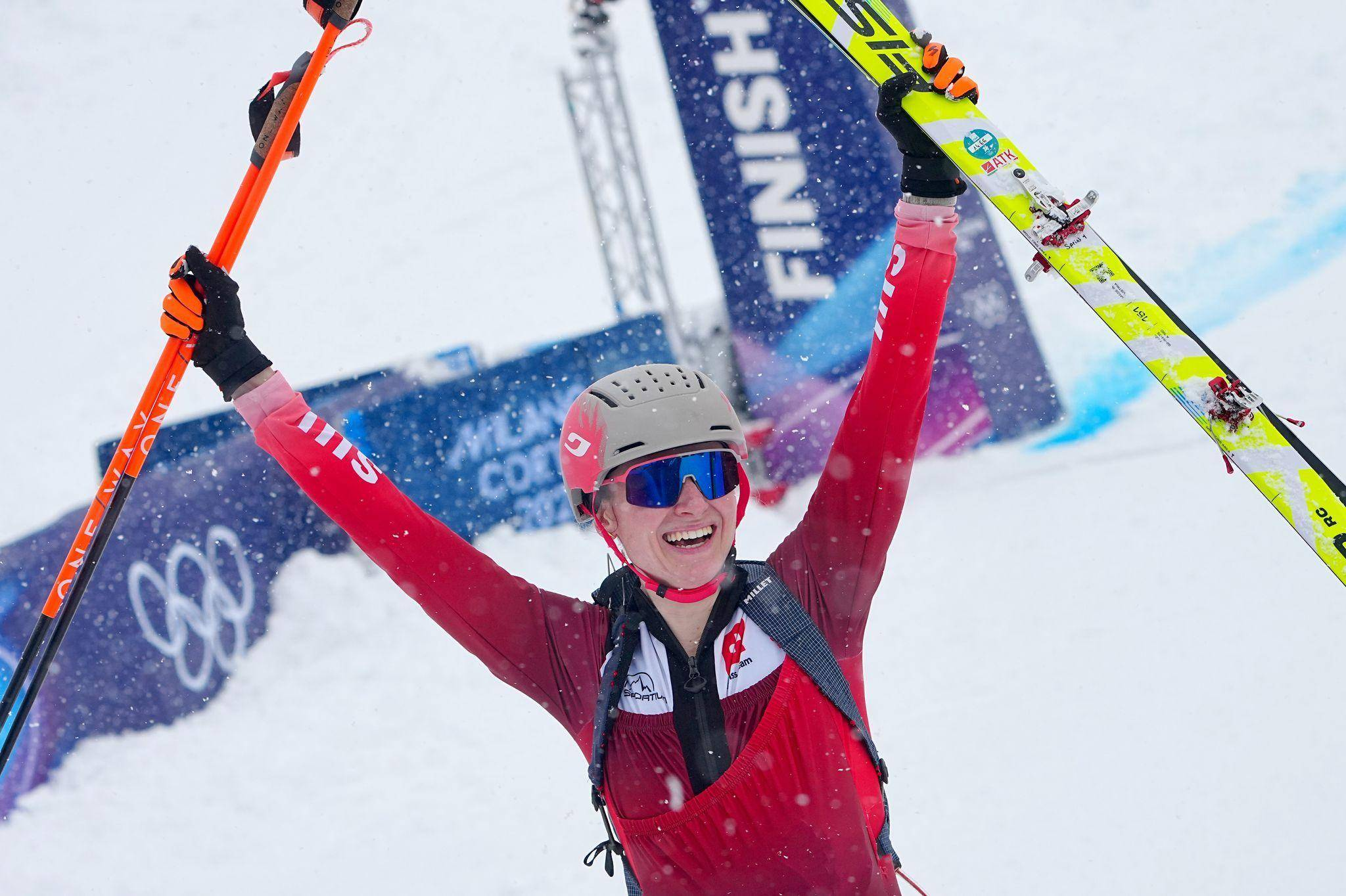
The inaugural Olympic champion in women's ski mountaineering recorded a final time of 2:59.77. The silver medalist, entering the competition as the top-ranked sprinter from the 2024-25 season, finished 2.38 seconds behind. The bronze medalist, representing a federation with limited historical Winter Olympic success, completed the course 10.45 seconds behind the winner.
Technical analysis of the final indicates that transition efficiency—specifically the removal of skis and attachment of climbing skins—proved decisive. The second-place competitor experienced equipment transition difficulties at the second transition zone, creating an insurmountable time deficit despite maintaining pace on the uphill segments. The winning competitor maintained consistent performance across skinning, boot packing, and downhill skiing disciplines.
Semifinal and Heat Analysis
The semifinal stage demonstrated the competitive density of the field, with the first semifinal producing the fastest qualifying time (3:06.57) and the second semifinal won in 3:10.13. The "lucky loser" qualification system, which advances the three fastest non-automatic qualifiers across all heats, allowed two athletes who placed third in their respective semifinals to advance to the final.
Heat performances revealed tactical variations, with some competitors establishing early leads in the initial uphill skinning section, while others prioritized energy conservation for later transitions. The three-heat structure, with automatic qualification for the top three in each heat plus three lucky losers, resulted in 12 semifinalists from an initial field of 18 competitors.
Medical and Training Protocol Observations
The bronze medalist's participation following injuries sustained in a vehicle collision four months prior—including ligament damage and fractures—raises considerations regarding return-to-competition protocols in endurance sports. The decision to pursue non-surgical treatment to maintain Olympic eligibility represents a calculated risk assessment that athletic federations may need to address through standardized medical clearance guidelines.
Structural Implications
The competition format, requiring proficiency in three distinct locomotion modes (uphill skiing, boot packing, and downhill skiing), presents unique physiological demands compared to established Olympic snowsports. Athletes from alpine skiing backgrounds demonstrated advantages in the downhill segments, while those with ski mountaineering specialization showed superior transition efficiency and uphill pacing.
The medal distribution—spanning federations with established mountain sport traditions and those with emerging programs—suggests that technical complexity in equipment transitions may offset advantages in pure aerobic capacity. This dynamic contrasts with cross-country skiing, where physiological factors typically predominate.
Governance and Development Considerations
The inclusion of ski mountaineering in the Olympic program reflects International Olympic Committee objectives to incorporate sports with lower infrastructure requirements and higher participation growth rates. The sprint format, as opposed to individual or team vertical races, was selected based on broadcast suitability and spectator accessibility.
For national federations, the sport's Olympic status necessitates evaluation of development pathway integration. Unlike alpine skiing, which requires substantial lift infrastructure, ski mountaineering can be developed in mountainous regions with limited capital investment. This accessibility may facilitate participation growth in non-traditional winter sport markets, particularly in Eastern Europe and Central Asia where backcountry skiing traditions exist.
Equipment and Technical Standards
The competition revealed variability in transition techniques, particularly regarding ski skin removal and boot attachment methods. Unlike cross-country skiing, where equipment standardization is highly regulated, ski mountaineering permits greater technical diversity in binding systems and ski construction. This regulatory flexibility creates competitive advantage through equipment innovation, though it also raises questions regarding competitive equity between federations with differential access to specialized gear.
The wet, snowy conditions during the final exposed limitations in current boot-binding interface designs, with multiple competitors experiencing transition difficulties. Equipment manufacturers may prioritize rapid-transition binding systems in future product development cycles based on Olympic performance data.
Commercial and Broadcast Factors
The event's scheduling in early morning hours (6:55 a.m. ET start for semifinals) reflects programming decisions prioritizing European prime-time audiences. For rights holders in North American markets, this timing presents challenges for live audience engagement, suggesting reliance on highlight packages and digital recirculation for market penetration.
The sport's visual distinctiveness—combining uphill athletic exertion with technical downhill skiing—offers differentiation from established snowsport broadcasts. However, the complexity of judging criteria and transition mechanics may require enhanced graphical explanation for audience comprehension, similar to the educational approaches employed during snowboard cross and ski slopestyle debuts.
Future Program Considerations
The competitive success of athletes from federations without dedicated ski mountaineering programs indicates potential for rapid competitive diffusion. The International Ski Mountaineering Federation may face pressure to expand Olympic representation to include individual and team vertical race formats, mirroring the progression of cross-country skiing and biathlon disciplines.
The "lucky loser" system's effectiveness in advancing competitively viable athletes who experienced heat-specific difficulties suggests retention of this qualification methodology for future championships, though it may require refinement to prevent tactical manipulation in heat assignments.
Comments