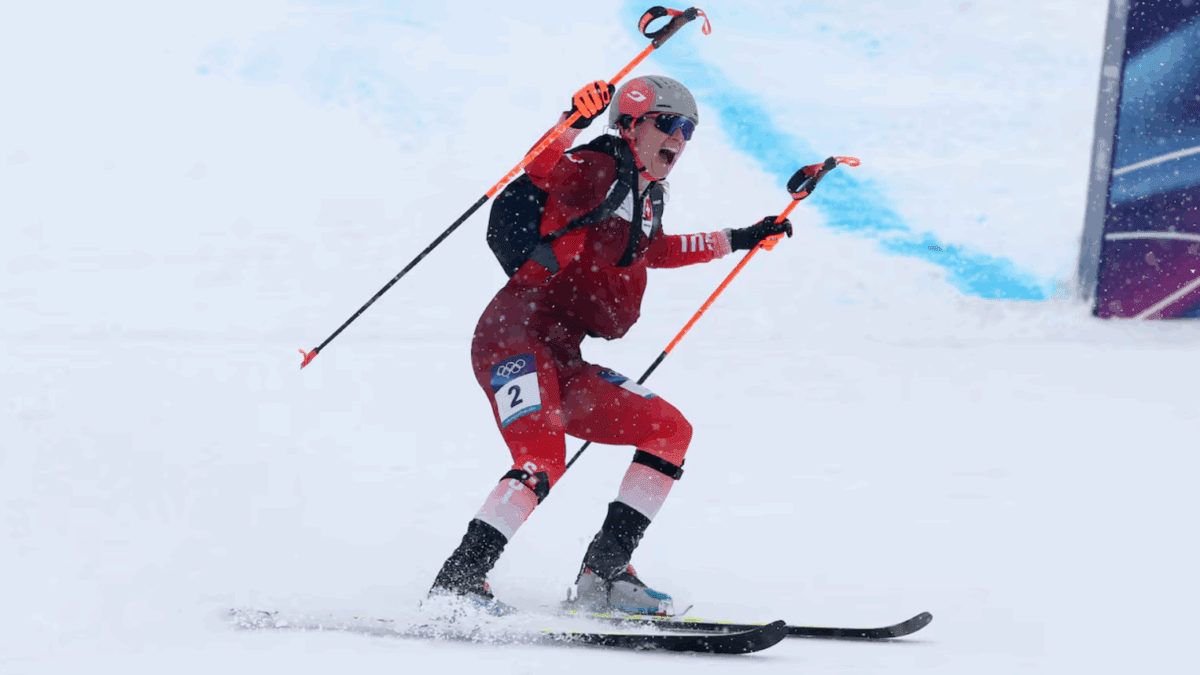
On 19 February 2026, ski mountaineering (Skimo) made its inaugural appearance at the Olympic Winter Games Milano Cortina 2026. The sprint events, contested at the Stelvio Ski Centre in Bormio, featured a 610-metre course with 70 metres of vertical gain, requiring competitors to complete uphill segments on skis and foot followed by technical downhill descents.
Competition Outcomes
In the women's sprint, the winning time of 2:59.77 established the first Olympic record in this discipline. The margin of 2.38 seconds to second place and 10.45 seconds to third reflected varying technical execution across the transition zones and stair climbing segments. The result contributed to the winning federation's medal tally at these Games.
The men's sprint produced a winning time of 2:34.0, with the top three finishers separated by 2.3 seconds. The victorious athlete's federation had not secured a Winter Olympic gold medal since 1972. The silver medalist competed under the AIN (Individual Neutral Athletes) designation, reflecting ongoing eligibility protocols for certain national federations.
Technical and Environmental Factors
Competitors faced heavy snowfall during the events, introducing additional variables to an already technically demanding format. The course design incorporated a "diamond section" requiring rapid equipment transitions and ascending stair segments, where traction and pacing strategy proved decisive. Athletes were observed employing varied techniques in the stair sections, including single and double-step approaches, indicating lack of standardized optimal methodology in this novel Olympic discipline.
Medical and Training Protocol Observations
The bronze medalist in the women's event reportedly returned to competition four months after sustaining injuries from a vehicle collision during training. The decision to forgo surgical intervention in favor of rehabilitative treatment and subsequent podium finish raises questions regarding return-to-competition protocols in endurance sports. This case may prompt review of medical clearance standards by international federations, particularly in sports where upper-body poling and load-bearing activities are required.
Structural Implications
The inclusion of ski mountaineering in the Olympic program represents the International Olympic Committee's continued expansion of snowsport disciplines targeting younger demographics and alternative competitive formats. The sprint format, as opposed to longer individual or team events, was selected for debut based on broadcast suitability and venue logistical constraints.
The competitive outcomes suggest that established mountain sport federations with existing skimo development structures hold initial advantage, though medal distribution across multiple nations indicates potential for rapid competitive diffusion. The AIN medalist's presence on the podium demonstrates that eligibility restrictions do not necessarily preclude competitive success in technically complex disciplines.
Governance Considerations
The introduction of new disciplines into the Olympic program requires coordination between international federations, organizing committees, and broadcast partners. The Stelvio venue, historically utilized for alpine skiing World Cup events, required modification to accommodate dual-direction courses and transition zones. These infrastructure adaptations may inform venue planning for future Winter Games, particularly in regions with limited dedicated skimo facilities.
The sport's Olympic debut coincides with increased global participation rates in recreational ski touring, suggesting potential for sustained audience engagement beyond the competitive elite. National federation development programs may prioritize skimo integration based on accessibility of equipment and terrain relative to traditional alpine disciplines.
Commercial and Developmental Factors
From a sporting goods perspective, the Olympic exposure of specialized skimo equipment—including ultra-lightweight skis, carbon boots, and transition-optimized bindings—may accelerate market segmentation within the broader ski industry. Unlike alpine skiing, where equipment standardization is highly regulated, skimo maintains greater technical diversity, potentially creating competitive advantage through material innovation.
The discipline's combination of endurance and technical components aligns with broader trends in outdoor sport participation, where multi-skill formats gain preference over single-discipline specialization. This positioning may attract non-traditional winter sport sponsors focused on outdoor lifestyle markets rather than conventional athletic apparel brands.
Comments