Norway’s women completed a historic double on the large hill at Milano-Cortina 2026, claiming the first-ever Olympic gold in the discipline barely a week after sweeping the normal-hill podium.
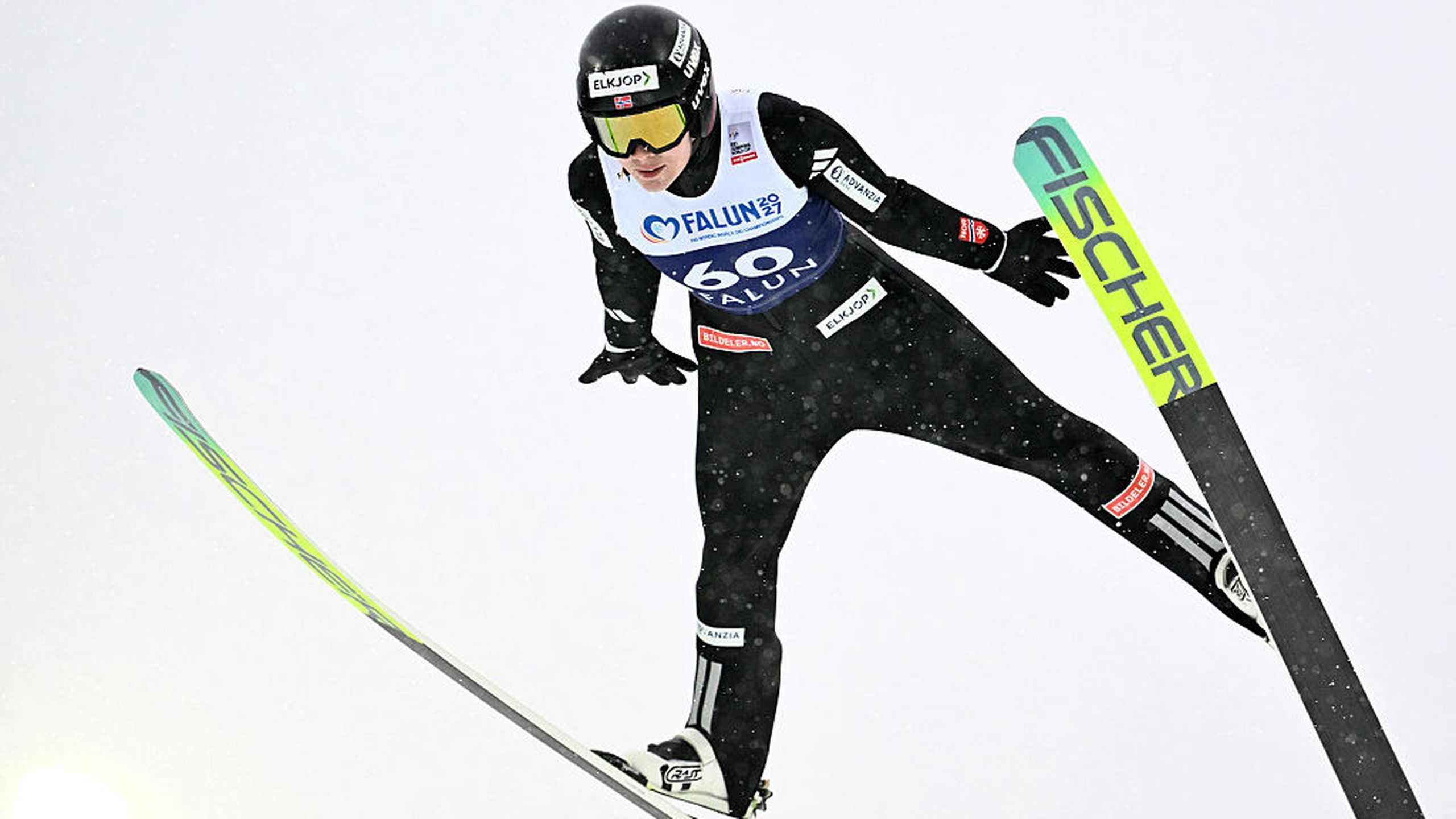
Norway Caps Historic Double on Large Hill
The winning athlete landed at 132 m, two metres shorter than her nearest rival yet scored 144.8 style points to edge Slovenia’s silver medallist by 2.1 total points. The victory gave Norway its second women’s ski-jumping gold of the Games and lifted the team’s overall medal count to 26, four clear of host nation Italy. Wind compensation, not raw distance, settled the outcome: a 1.2 m/s head-wind for the winner trimmed her distance points but boosted judges’ marks for control, while the Slovenian jumped into a milder 0.4 m/s breeze that earned fewer style credits.
Wind Points Decide Podium Order
Bronze went to the reigning world champion in both hill sizes, who clawed from fifth after round one with a second-jump 133 m that drew the day’s highest single-round style score. The comeback underscored the volatility of large-hill competition: a single metre gained in the air can translate to only 0.6 distance points once wind and gate corrections are applied, whereas a half-point swing on any of the five judges’ cards moves the tally by 3.0 points. Coaches said the athlete’s earlier struggles stemmed from an “over-adjusted” ski position that cost aerial stability, a technical lapse she corrected mid-competition.
New Event Closes 12-Year Inclusion Gap
Tuesday’s contest was the first time women have flown farther than 125 m at an Olympics, filling the final gap left when normal-hill events debuted at Sochi 2014. Predazzo’s HS-140 scaffold—built for 2026 and rising 105 m above the valley—met International Ski Federation (FIS) specifications for women’s large-hill landings, including a 37-degree steep-track transition and an extended out-run to absorb the higher kinetic energy of 90 km/h impacts. FIS gender-equity targets now list team large hill as the next milestone, though officials say implementation could wait until the 2030 cycle to avoid overloading first-time host venues.
Equipment Rules Shift to Match Men’s Specs
The 2025-26 equipment code aligned women’s large-hill gear with the men’s: minimum ski length is 145 % of body height, bindings sit 2 cm farther back, and suits must pass a 10 mm air-permeability test to limit gliding surfaces. Norwegian technicians revealed they shaved 80 g off the winner’s ski tips by switching to a carbon-reinforced lay-up, trimming swing weight without violating flex-index rules. Safety crews, meanwhile, doubled medical sled capacity on the hill; large-hill crashes generate roughly 30 % more vertical force, according to FIS biometric studies released last autumn.
Medal Spread Suggests Depth Beats Stars
Four Norwegians topped the first-round standings, repeating the nation’s normal-hill lock-out and signalling a system-wide edge in talent depth rather than lone-star brilliance. Slovenia’s solitary silver came from an athlete who trains year-round on the Vikersund hill in Norway, illustrating how national programmes now share coaching intelligence across borders. Emerging nations such as China and the U.S. placed two jumpers each inside the top-25 but none advanced to the final round, a gap analysts tie to limited large-hill water-ramp access outside Europe.
Sources: FIS 2025 Equipment Regulations PDF; “Wind Compensation in Ski Jumping,” Oslo Sports Engineering Journal; Predazzo Venue Fact Sheet, Milano-Cortina organising committee; NBC Learn: Science of Ski Jumping; Women’s Ski Jumping USA
Comments