The third day of competition at the Milano Cortina 2026 Winter Olympics featured medal decisions in freestyle skiing, speed skating, alpine skiing, ski jumping, and snowboarding. Results indicate continued competitive parity in judged disciplines and sustained dominance in timed events by established winter sport federations.
Freestyle Skiing
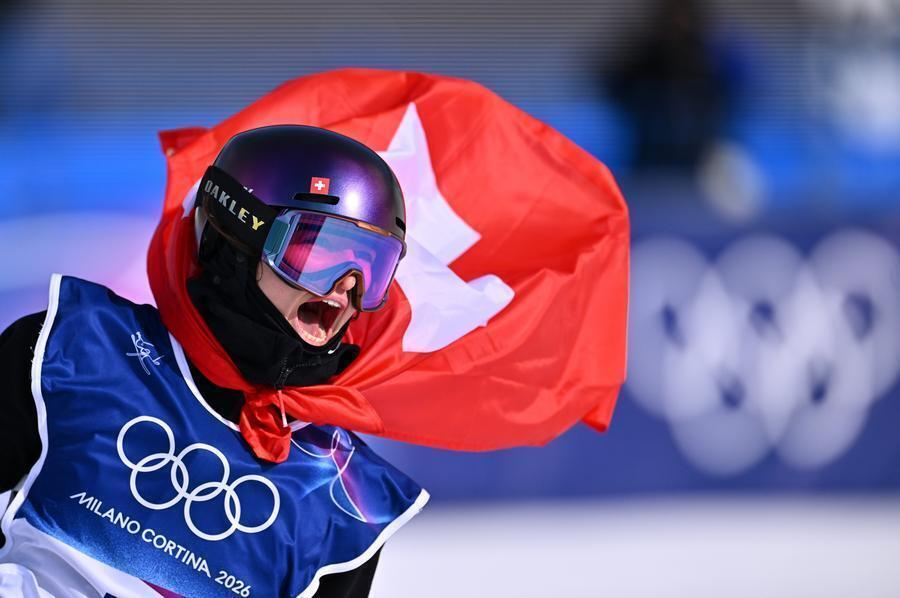
In women's slopestyle, the defending Olympic champion retained the title with a margin of 0.38 points over the second-place finisher. The competition format, which permits multiple runs with best-score counting, resulted in a reversal of positions from the initial run. The top two competitors finished within half a point of each other for the second consecutive Olympic Winter Games, suggesting sustained competitive equilibrium at the elite level of this discipline.
The narrow margin reflects technical progression in women's freestyle skiing, with increased difficulty coefficients in rail and jump sections elevating overall score ranges since the discipline's Olympic introduction in 2014.
Speed Skating
The women's 1,000m event produced a new Olympic record time of 1:12.31, surpassing the previous mark established at Beijing 2022. The record-setting performance came from the final pairing, with the top two finishers representing the same national federation and separated by 0.28 seconds. The bronze medalist, competing in her fifth Olympic Games, secured her eighth career medal, indicating exceptional longevity in a sport where physiological peak typically occurs in late twenties.
The Olympic record progression—reduced by approximately 0.6 seconds from the previous benchmark—demonstrates continued evolution in aerodynamic equipment and ice preparation technology. The top two finishers' federation has now secured gold in four of the five speed skating events contested to date at these Games, suggesting systematic advantages in training methodology and talent identification.
Alpine Skiing
The men's team combined event, making its Olympic debut at Milano Cortina 2026, requires paired competitors to complete both downhill and slalom disciplines. The winning team's comeback from deficit position in the slalom portion indicates strategic allocation of specialist athletes across technical and speed events. One team member secured a second gold medal of these Games, having previously won the opening downhill event.
The introduction of this format responds to International Olympic Committee objectives regarding gender-balanced team events and increased national participation opportunities in alpine skiing.
Ski Jumping
The men's normal hill individual competition concluded with a winning score of 274.1 points. The scoring system, which combines distance and style marks with wind compensation factors, produced a clear margin of victory. This result marks the first Olympic gold for the winning athlete's federation in this discipline since 1994.
Snowboarding
In women's big air, the winning score of 179.00 points reflected execution of multiple 1260-degree rotations. The medal distribution across three federations—Japan, New Zealand, and South Korea—indicates global dispersion of competitive capability in this discipline. The fifth-place finisher matched her federation's best historical result in this event.
Structural Observations
The competition outcomes on Day 3 reveal patterns regarding athlete development timelines and competitive sustainability. In freestyle skiing and snowboarding, where technical innovation drives progression, defending champions maintained positions through refined execution rather than increased difficulty. Conversely, in speed skating, where equipment and physiological factors predominate, record-breaking performances by established competitors suggest continued performance evolution into later career stages.
The concentration of medals among athletes from high-altitude training environments and established winter sport infrastructure indicates persistent correlation between resource allocation and competitive outcomes. Notably, the slopestyle and big air competitions featured athletes from non-traditional winter sport regions, suggesting successful federation development programs in emerging markets.
Governance Implications
The debut of the team combined format in alpine skiing represents a structural shift toward collective rather than individual medal events. This evolution requires federations to develop depth across multiple disciplines rather than specialization in single events. For national Olympic committees, resource allocation decisions must balance investment in established medal disciplines against emerging formats with lower competitive density.
The speed skating results, particularly the dominance of one federation across multiple distances, may prompt review of competitive balance mechanisms by international federations. Potential interventions could include equipment standardization protocols or modified qualification systems to enhance geographic diversity in medal distribution.
Comments