Rain-Soared 141.5-metre Leap Wins Olympic Large-Hill Gold on Final Jump
A 141.5-metre hill record on a rain-soaked Predazzo hill decided the Olympic large-hill title, vaulting an athlete from fourth to first on the final jump of the Milano–Cortina 2026 men’s competition.
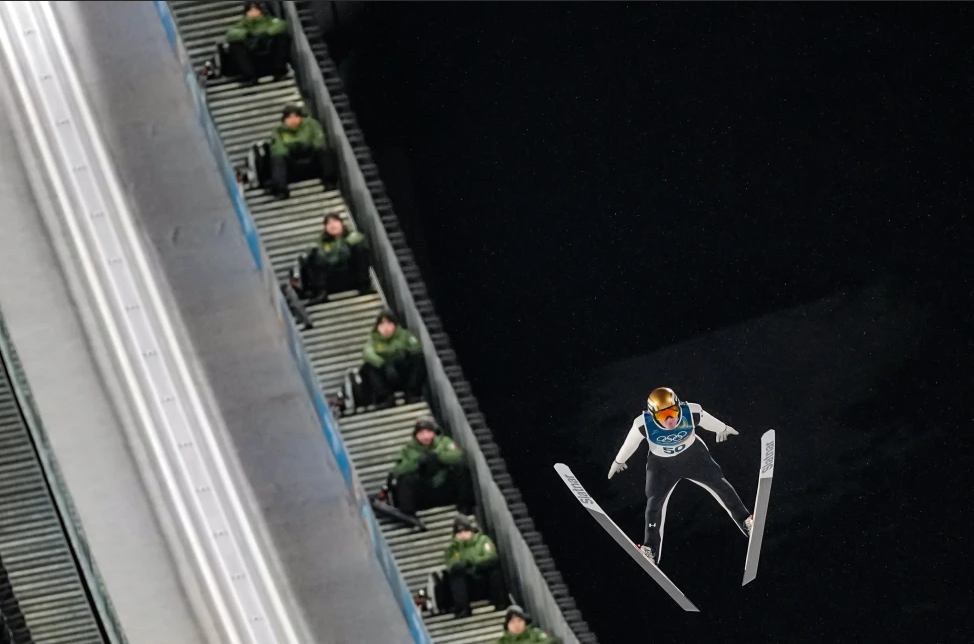
Final-Jump Comeback Erases 7-Point Gap
The eventual champion, trailing by seven points after round one, chose a higher start gate and a more aggressive flight position, translating to an extra five metres in the air. That single decision flipped the standings: the overnight leader slipped to silver, while the record leap delivered the jumper’s second gold of these Games following last week’s mixed-team victory. Bronze went to a World-Cup rookie who overtook a former world champion on his second effort, underscoring how two-round ski-jumping formats magnify single-jump volatility.
Siblings Rewrite Olympic History Books
The victory also etched a new family milestone: the winner and his sister—who teamed up in the mixed event—became the fourth set of siblings from one household to own Olympic ski-jumping medals, joining previous Norwegian and Slovenian sets. Coaches attribute such lineage success to early access to specialized hills, shared wax cabins and synchronized video analysis that shorten learning curves. With all three individual podium athletes first-time Olympians, the result signals a generational shift in a discipline long dominated by 30-something veterans.
Hill Record Puts Scoring Sensitivity on Display
Measured at 141.5 m, the winning distance eclipsed the old Predazzo mark by 1.5 m despite headwinds that forced officials to lower the start gate twice. Under large-hill scoring tables, each additional metre beyond the “K-point” yields roughly 1.8 points—enough to render style scores secondary when gaps exceed four metres. The swing validated coaches’ pre-event simulations showing that a 4.5-metre edge could overcome a seven-point deficit, a scenario that materialised almost exactly.
Precipitation Tests Equipment and Preparation Protocols
Steady sleet and −6 °C air turned the in-run track glassy, prompting technicians to hand-brush micro-structures into ski bases between jumps to retain wax adhesion. Aerodynamic suits, normally calibrated for sub-0.3 drag coefficients, absorbed atmospheric moisture that could add fractional kilos—sufficient to shorten flight by roughly 0.6 m according to wind-tunnel data. Athletes from continental climates, accustomed to variable snow, adjusted binding positions forward 2 mm to stabilise flight; those from maritime indoor facilities largely skipped the tweak and paid on the scoreboard.
Emerging Nations Mirror European Development Arc
Poland’s bronze, won on infrastructure built for the 2017 junior worlds, fits a five-to-ten-year cycle in which new hills precede global podiums. Japan’s silver extends Asia’s gradual encroachment on European dominance, a trend the International Ski and Snowboard Federation (FIS) cites when lobbying the IOC for quota expansions. Both outcomes feed the federation’s argument that ski jumping’s geographic footprint is widening, a key metric for programme retention beyond 2030.
Sources: FIS official ski-jumping rules; Predazzo live hill data; “Ski Jumping Science” YouTube channel; Olympic Channel documentary “Flight Family”
Comments