Snow fell on the Stelvio piste above Bormio as 24 women stepped into the start gate for the first Olympic ski-mountaineering sprint, 6:55 a.m. local time, 28 February 2026. Fifty-one seconds after the starter’s beep, the field strung out in a herringbone climb, and a new discipline officially entered the five-ring circus.
Olympic Sprint Format and “Lucky Loser” Rule
Organisers compressed qualification, two semifinals and the final into 75 minutes to satisfy broadcasters. Each 250-metre lap climbed 80 m on skins, forced a 180-degree switch to boot-pack, then dropped racers back down on locked heels. The top three from each opening heat advanced automatically; the next three fastest times overall earned “lucky loser” slots, ensuring an unlucky draw could not eliminate a medal threat. The structure produced 12 semifinalists from 18 starters and kept medal hopes alive for two women who had placed only third in their heats.
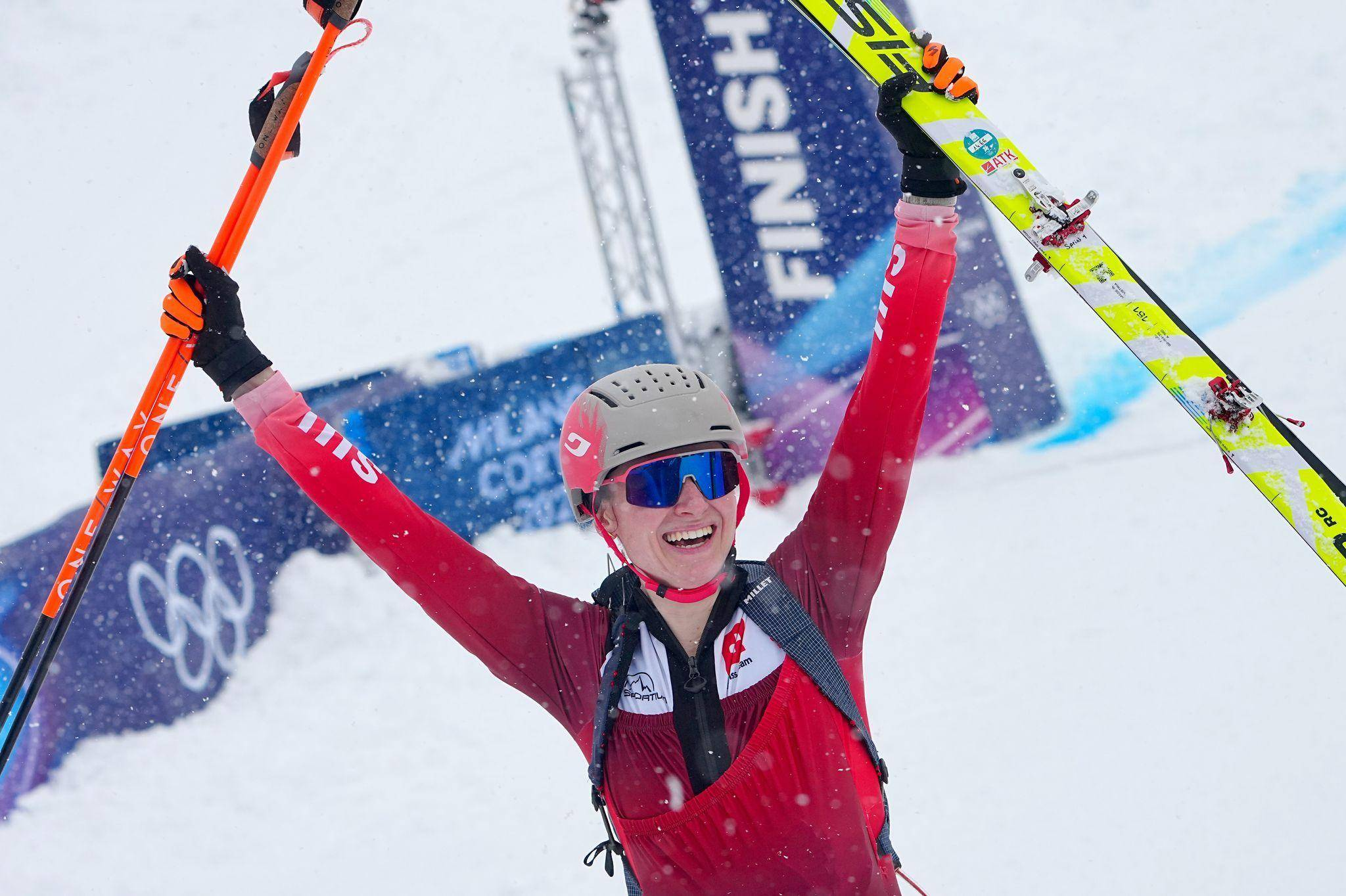
Transition Speed Decides Inaugural Women’s Ski-Mo Gold
In the four-woman final the champion covered the course in 2 min 59.77 s, using a carbon-over-paulownia ski 5 cm shorter than her qualifier set to shave weight. The pre-race World Cup points leader took silver, 2.38 s back, after fumbling a skin clip at the second transition and losing pole rhythm on the boot-pack. Bronze finished 10.45 s behind the winner, remarkable given the athlete had skipped World Championships four months earlier to rehab ligament damage from a roadside collision and chose conservative, non-surgical treatment to stay eligible for Milano-Cortina.
Wet Snow Exposes Gear Differences
Persistent snowfall turned the synthetic track abrasive, forcing several competitors to re-adjust binding heel risers mid-race. Coaches reported a three-second spread between the quickest and slowest transitions, equal to the final medal gap. Manufacturers whose toe-pieces allow one-motion heel rotation, still rare on the World Cup circuit, gained an instant advantage, while athletes on standard alpine-derived frames lost poles or skins when ice clogged the lever. The conditions validated recent rule tweaks that permit any ISO-certified binding but highlighted equity concerns: wealthier federations had shipped four ski-binding combinations per racer; smaller teams arrived with one.
Medal Spread Shows Sport’s Global Reach
Medals landed with traditional mountain nations and a federation that had never previously stood on a Winter podium, illustrating ski-mountaineering’s low infrastructure barrier. The winning programme built its base at an alpine tunnel that charges €12 per dawn ascent, far cheaper than lift-served downhill academies. The climb-heavy format favours aerobic engines common in distance running and cycling, inviting talent transfers from nations without glacial terrain. International Ski Mountaineering Federation data show licence growth of 42 % in Eastern Europe since 2022, a curve Olympic inclusion is expected to steepen.
Broadcast Plans and Future Events
Rights-holder NBC aired a same-day package rather than the live 6:55 a.m. ET start, ceding morning bandwidth to European prime time. Graphics teams borrowed the “ghost-skier” overlay pioneered in snowboard cross to illustrate transition splits, but commentators still spent 43 % of airtime explaining skins, crampons and boot-pack poles. Looking ahead, ISMF directors will lobby for vertical-team events at the 2030 Games, citing cross-country skiing’s expansion from sprint to skiathlon as precedent. National Olympic committees must decide whether to fold ski-mo into existing alpine structures or fund standalone coaching staffs; early movers could lock in medal pathways before specialised talent pools deepen worldwide.
Gear Impact Under Wet Snow
Talent Pathways Beyond the Alps
Recommended Resources
- International Ski Mountaineering Federation – Official rulebook, World Cup calendars, and continental qualifier pathways
- “Training for the Uphill Athlete” by House, Johnston, Jornet – Science-backed manual on endurance, transition drills, and strength specific to skinning
- Skintrack.com community forum – Crowd-sourced gear reviews, snow condition reports, and technique videos from recreational to elite level
- SkiMo.coach app – Free interval timer and transition split logger that exports data to coaches for Olympic-format analysis
Comments