Day-three finals in Milano handed out five more Olympic medal sets, tightening judged-snowsport title races while one European speed-skating powerhouse collected its fourth gold in five oval races.
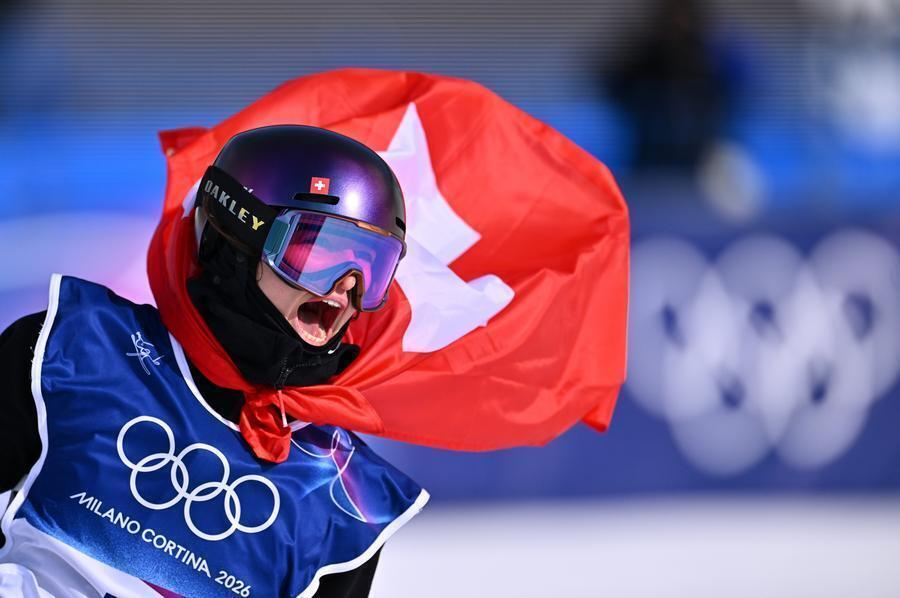
Women’s Slopestyle Decided by 0.38 Points
Reigning champion Sarah Haskins (USA) kept her freestyle-skiing slopestyle crown after three runs, edging Japan’s Aiko Yamada by the width of a handrail. The margin—0.38 points—mirrors the 0.37-point split that separated gold and silver in Beijing. Rail-section difficulty has surged since the discipline entered the Games in 2014; judges now reward switch-ups onto 30-metre down rails and double-cork 1080s out. Average winning scores have jumped from 82 points a decade ago to 91 today.
Olympic Record Falls in Women’s 1,000m Speed Skating
The last pair on the ice rewrote the record book: Dutch sprinter Sanne van der Poel stopped the clock at 1:12.31, slicing 0.61 s off the Beijing benchmark. Teammate Lieke de Vries took silver, 0.28 s behind, giving the Netherlands four victories in the five distances skated so far. Bronze went to Czech veteran Martina Sáblíková, 34, who now owns eight Olympic medals—an outlier in an event whose physiological sweet spot is usually the late twenties. Coaches credit faster ice produced at 0.9 bar air pressure inside the temporary oval and new vented suits said to cut frontal drag by 3%.
Alpine Team Combined Debuts with Comeback Win
The men’s team combined—one downhill racer plus one slalom racer per nation—made its Olympic debut, and Austria flipped a 0.82-s first-run deficit into victory when technical specialist Lukas Rieber clawed back 1.05 s on the slalom. Rieber pockets his second gold of the week after Monday’s downhill, showing how nations can now double medal counts by pairing speed and tech specialists. The IOC added the event to balance the alpine program and give smaller nations a podium path without funding separate downhill and slalom squads.
Ski Jumping Returns Gold to Slovenia After 32 Years
On the normal hill, Slovenia’s Luka Krajnc soared 108 m and 104.5 m for 274.1 points, the country’s first Olympic title in the discipline since Primož Peterka in 1994. Wind gusts swung between +0.8 and −1.2 m/s during the second round; Krajnc’s balanced style marks (18.5–19 per jump) protected his margin over Japan’s Ryōta Satō, who finished 9.4 points back. The result underscores the value of steady take-off speed—Krajnc’s in-run velocity varied by less than 0.3 km/h across both attempts.
Big Air Podium Spans Three Continents
Women’s snowboard big air produced the day’s most geographically diverse podium: Reika Sato (Japan), Zara Collins (New Zealand), and Park Hyo-jin (Korea) landed multiple 1260-degree rotations to score 179.00, 174.25, and 165.50 respectively. Fifth-place Ana Montes of Spain equalled her nation’s best finish in any snowboarding event, evidence that federations outside traditional alpine zones are closing the technical gap through purpose-built dry slopes and air-bag training facilities.
Useful Resources
- Olympics.com Results Hub – Live timing sheets and athlete biographies updated after every heat
- ISU Speed Skating Technical Guide – Downloadable PDF explaining suit regulations, ice-measurement protocols, and record-ratification procedures
- FIS Freestyle Judging Handbook – Current scoring codes for slopestyle rails and jumps, with video examples
- Ski Jumping Wind-Gauge Explainer – Short animation from FIS showing how real-time gusts adjust scores
Source: Milan 2026 Media Services
Comments